When people talk about evaluating community projects, the conversation often begins with numbers. How many families came? How many workshops took place? How many books were sold? How many children took part? These figures matter. They help demonstrate reach and accountability.
But at CALFE, we have learnt that the richest feedback is rarely found on a spreadsheet. It is found in the conversations we overhear, the questions families ask, the children who refuse to leave, and the quiet moments that reveal how people truly experienced the day.
As a festival that celebrates children’s literature, heritage and community voices, we believe listening is as important as storytelling itself. Every event gives families the opportunity to discover books, celebrate cultures, connect across generations and, just as importantly, tell us what these experiences mean to them.
Sometimes they tell us with words. Sometimes they tell us without saying a thing.
The Youngest Voice in the Room
At CALFE 2024, hosted across the upper floor galleries of Manchester Museum, we installed a giant whiteboard and invited visitors to leave a thought, a drawing or a message as they explored the festival.
One family had already immersed themselves in the day. They had listened to three storytelling sessions, returned to the arts and crafts activities twice, and Dad looked more than ready to call it a day. His 18-month-old daughter disagreed. She marched over to the feedback wall, picked up a marker and became completely absorbed in leaving her own contribution. Minute after minute, she carefully filled the board with her marks, utterly convinced that what she had to say mattered. Eventually, Dad had no choice but to lift her into his arms. She protested loudly all the way to the exit. No one could read what she had written. Yet everyone understood exactly what she meant. She had found a place where she felt included. Where even the youngest visitor believed their voice belonged alongside everyone else’s. For us, that is what meaningful engagement looks like.
When Parents See What Children Can Become
The following year, another memorable conversation unfolded. A mother of triplets stopped simply to say thank you. She spoke about how remarkable it had been to watch all three of her children completely absorbed in books, storytelling and creative activities throughout the day. Like many parents, she knew how difficult it can be to find experiences that capture every child’s imagination at once. Her gratitude reminded us that festivals are never only for children.
We find that our events are for intentional parents who discover new ways to share stories. For grandparents who pass on memories. For carers who watch confidence grow with every page turned and every story heard.
These shared experiences are where reading becomes more than an activity. It becomes part of family life.
“Why Don’t You Charge?”
In Saffron Walden, one parent left us with a question that has stayed with us ever since. “Why didn’t you charge for this?” It wasn’t a complaint. It was genuine surprise. To them, the quality of the experience felt like something they would happily have paid for.
To us, it reinforced something we have always believed. Access matters. Children should be able to discover stories that reflect their cultures, histories and identities without cost becoming a barrier. Families should be able to spend a day immersed in books, creativity and heritage without worrying whether they can afford to take part. When communities feel welcomed rather than priced out, everyone benefits.
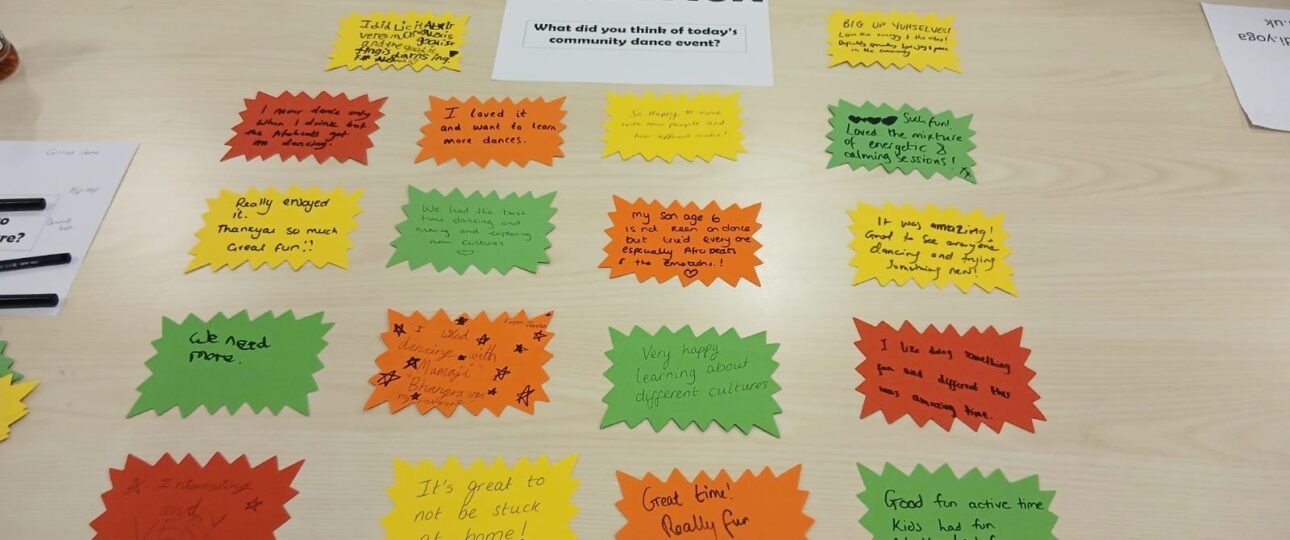
Every Voice Shapes the Next Chapter. The story continues in Chelmsford. The Post-it notes featured in this blog are more than colourful displays of appreciation. They are snapshots of what families valued most, what surprised them, what inspired them and what they hope to see again. Each one helps shape the future of CALFE.
Because feedback is not something we collect at the end of a project. It is something we carry into the next one.
As we continue to champion children’s literature from Africa, the Caribbean and the wider diaspora, celebrate heritage, and create spaces where every family feels they belong, listening remains one of our most important responsibilities.
Stories change lives. But so do the conversations that happen after the last page is turned. Perhaps that is the greatest lesson our communities continue to teach us. If we want children to know their stories matter, we must first show them that their voices do too.